
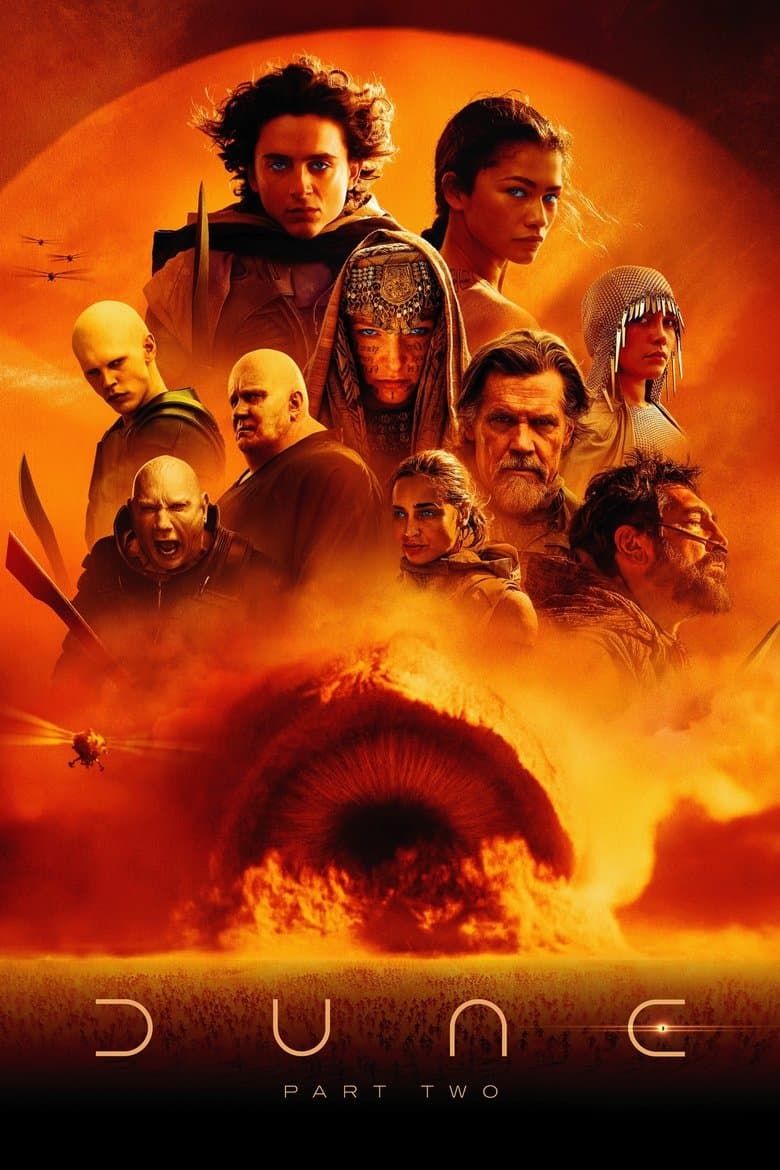
Dune: Part Two
Villeneuve delivers the rare sequel that improves on its predecessor, weaponizing scale and sincerity into the most confident blockbuster in years.
Denis Villeneuve
Mar 1, 2024
Quick Verdict
“A rare sequel that out-scales, out-acts, and out-argues its predecessor. Dune: Part Two is the modern blockbuster at its most fully realized.”
Plot Summary
Paul Atreides unites with the Fremen of Arrakis in a war of revenge against the conspirators who destroyed his family. As Paul embraces the role the desert tribe expects of him, Chani watches the man she loves disappear into a prophecy she never believed in — and the Harkonnen empire sharpens a final, terrifying counterstroke in Feyd-Rautha.
Full Breakdown
A blockbuster that believes in itself without irony
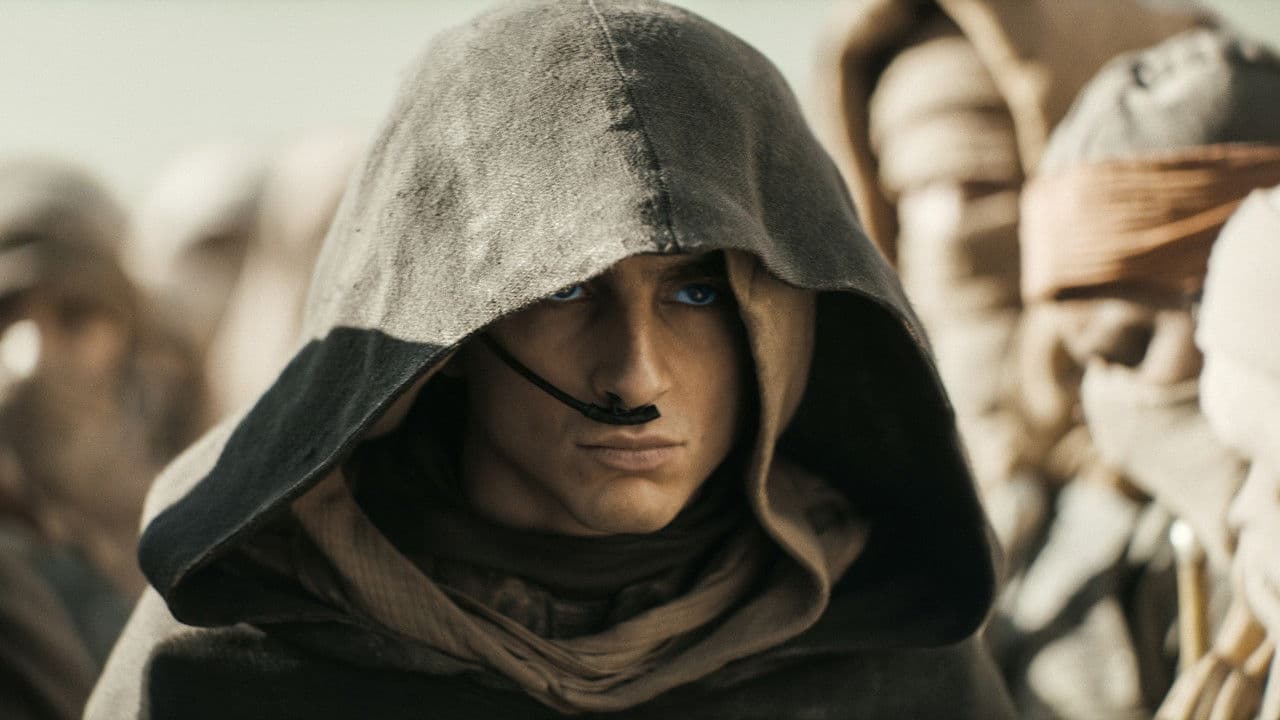
Dune: Part Two is the kind of science-fiction film the industry was supposed to have stopped making. It is long, sincere, patient, and operatic in a register contemporary Hollywood has spent a decade apologizing for. Villeneuve and co-writer Jon Spaihts treat Paul Atreides's ascension as a political horror story rather than a heroic arc, and that reframing is what gives the sequel its moral center.
Where the first film was a deliberate table-setter, Part Two is structural escalation. Every scene is load-bearing. The Fremen strategy sessions, the sietch domestic scenes, the Harkonnen arena sequence on Giedi Prime — each one is the film arguing for its own existence, not waiting for the next set piece.
Zendaya and Austin Butler reorder the ensemble
Zendaya's Chani is the film's moral witness and its quiet devastation. The first film kept her at the edges of dream imagery; Part Two makes her a political adversary to the prophecy itself. The final shot of the film is her back turned, and it is the most loaded closing image of a 2024 blockbuster.
Austin Butler's Feyd-Rautha is a genuine villain reinvention. He plays decadence as physical precision, not camp, and the Giedi Prime duel is the kind of sequence people leave a theater talking about. Timothée Chalamet grows decisively into the lead, delivering the throne-room speech as a man who has already decided his soul is a strategic asset.
Greig Fraser and Hans Zimmer build a world at symphonic scale
Greig Fraser's cinematography is the decade's reference point for IMAX framing. The Giedi Prime sequence shot in infrared black-and-white is not a gimmick — it is a complete visual language for a world without a sun.
Hans Zimmer's score is louder, stranger, and more melodic than in Part One. The choral work for the Fremen, the percussion during the sandworm ride, and the brass for the Emperor's arrival each function as political arguments, not just atmosphere.
Pros and cons
Pros: The year's most confident blockbuster; Zendaya and Butler are revelations; the sandworm-riding sequence belongs in the canon of great action cinema.
Cons: Part One is effectively mandatory viewing first; the 166-minute runtime is earned but uncompromising; the film ends mid-story on purpose, which will frustrate viewers expecting closure.
What Hits
- Exceptional execution of science fiction, epic, drama tropes
- Stunning cinematography and production design that demands a large screen
- A compelling lead performance that anchors the entire narrative
Pressure Points
- A few minor subplots feel slightly underdeveloped
- May feel overly familiar to long-time fans of the genre
96
Where to Watch


Primary Cast
Featured Actors
Production Specs
Technical Details
Join the discussion
Most viewed today
 01
01Reviews · 3 min
In the Blink of an Eye (2026) Review: A Defining Moment for Science Fiction, Drama
 02
02Features · 3 min
Star Wars: Maul - Shadow Lord (2026) Review: A Defining Moment for Animation, Sci-Fi & Fantasy, Action & Adventure
 03
03Reviews · 3 min
The Super Mario Galaxy Movie (2026) Review: A Defining Moment for Family, Comedy, Adventure, Fantasy, Animation
 04
04Features · 3 min