
The Brutalist
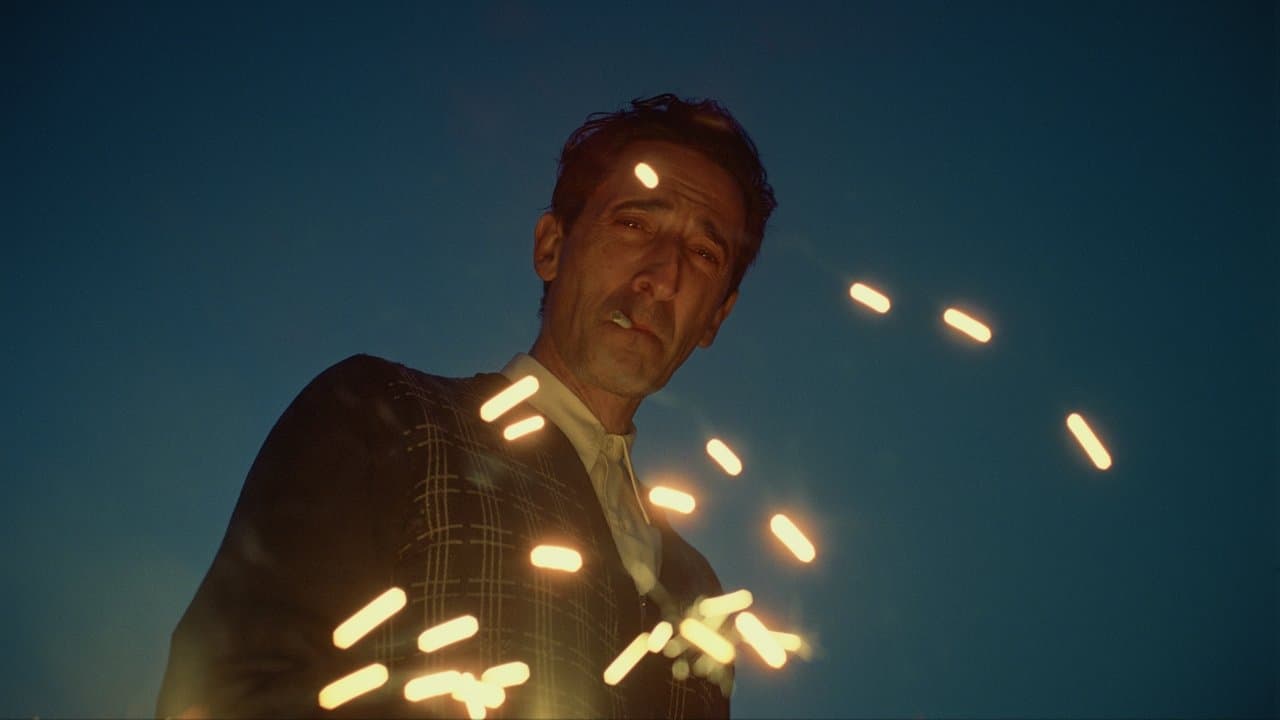
A 215-minute VistaVision epic shot for under $10 million, and one of the most formally ambitious American dramas in a generation.
Brady Corbet
Dec 20, 2024
Quick Verdict
“A swing-for-the-fences American epic. Adrien Brody delivers his best performance since The Pianist, and Corbet's formal ambition — VistaVision, overture, intermission — is fully justified by the material.”
Plot Summary
Hungarian-Jewish architect László Tóth survives the Holocaust and emigrates to Pennsylvania, where a wealthy industrialist's commission — a civic monument blending chapel, library, and community center — becomes a decades-long battle over credit, compromise, and the price of European craft in American capitalism.
Full Breakdown
An immigrant epic that understands that architecture is a story about money
Corbet and co-writer Mona Fastvold's screenplay refuses the inspirational-artist template. László's Bauhaus training is respected by the film but never romanticized by the culture around him. His patron, Harrison Van Buren, needs a monument more than he needs a building — and the film is attentive to that distinction.
The central argument is that post-war American prosperity absorbed European modernism by translating it into a product. László's fight to preserve proportions, ceiling heights, and material specifications is the film's spine, and it is dramatized with the specificity of a courtroom drama.
Adrien Brody delivers a career-defining lead performance
Brody plays László's Hungarian accent, posture, and physical depletion with extraordinary consistency. He makes addiction, grief, and professional stubbornness coexist inside a single character without resolving them for the audience's comfort.
Guy Pearce's Van Buren is the film's most dangerous performance. Pearce plays patronage as a form of possession and never lets the charm fully mask the coercion. Felicity Jones, as László's wife Erzsébet, arrives in Part Two and recalibrates the moral geometry of the film in a single dinner scene.
VistaVision, the intermission, and Daniel Blumberg's score
Shot on VistaVision for the first time in decades, the film's physical scale is a political statement. Lol Crawley's photography is monumentally composed without being sterile, and the fifteen-minute intermission mid-film is treated as a genuine formal choice rather than a marketing hook.
Daniel Blumberg's score — brass-heavy, modal, dissonant — is the most distinctive film score of 2024. It borrows from modernist composition the way the building László is drawing borrows from Bauhaus.
Pros and cons
Pros: A 215-minute runtime that is almost entirely justified; formal ambition at a level American cinema rarely attempts at this budget; Brody's best work in two decades.
Cons: Part Two is uneven, particularly a late-film plot turn that critics have legitimately questioned; the length is a real commitment; the intermission only exists in certain theatrical presentations.
What Hits
- Exceptional execution of drama, history, epic tropes
- Stunning cinematography and production design that demands a large screen
- A compelling lead performance that anchors the entire narrative
Pressure Points
- A few minor subplots feel slightly underdeveloped
- May feel overly familiar to long-time fans of the genre
93
Where to Watch


Primary Cast
Featured Actors
Production Specs
Technical Details
You might also like
Similar titles worth watching

Join the discussion
Most viewed today
 01
01Reviews · 3 min
In the Blink of an Eye (2026) Review: A Defining Moment for Science Fiction, Drama
 02
02Features · 3 min
Star Wars: Maul - Shadow Lord (2026) Review: A Defining Moment for Animation, Sci-Fi & Fantasy, Action & Adventure
 03
03Reviews · 3 min
The Super Mario Galaxy Movie (2026) Review: A Defining Moment for Family, Comedy, Adventure, Fantasy, Animation
 04
04Features · 3 min