
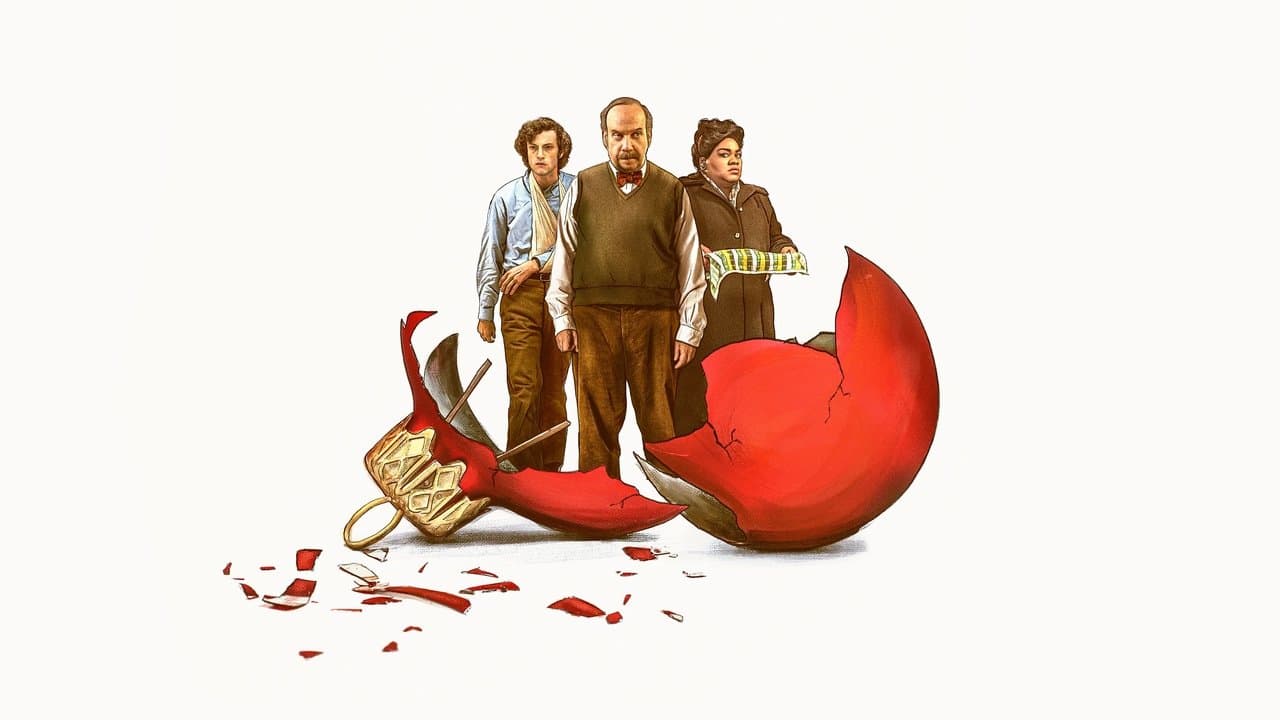
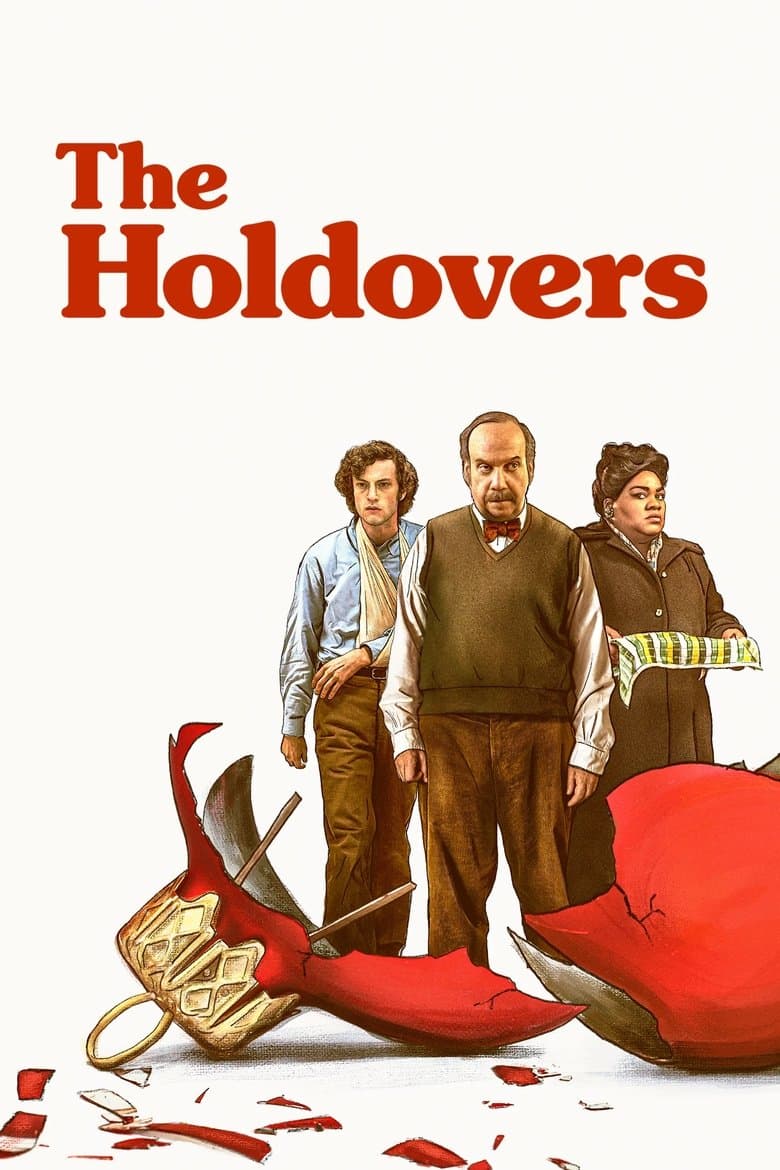
The Holdovers
A 1970s boarding-school chamber piece that turns three strangers and a Christmas break into the warmest film Payne has ever made.
Alexander Payne
Oct 27, 2023
Quick Verdict
“A throwback with real soul. Paul Giamatti and Da'Vine Joy Randolph deliver career-best work, and the film earns its warmth without once reaching for it.”
Plot Summary
In December 1970, curmudgeonly classics teacher Paul Hunham is stuck supervising students who cannot go home for the holidays at a New England prep school. When the group narrows to one — troubled senior Angus Tully — Paul and head cook Mary Lamb, grieving her son lost in Vietnam, form an unlikely household across two weeks of enforced proximity.
Full Breakdown
A 1970s pastiche that is really a grief film in a cardigan
The Holdovers goes to extraordinary lengths to look like a film shot in 1971 — grainy stock, period logos, a Hal Ashby cadence — but the surface is a trojan horse. Underneath the affectation is a surprisingly frank story about men who cannot apologize and a woman mourning a son the institution helped kill.
David Hemingson's screenplay is patient. He trusts that if you put three correctly drawn people in a snowbound academic building long enough, the plot will take care of itself.
Giamatti, Randolph, and Sessa form a three-body problem
Paul Giamatti's wall-eyed, Greek-muttering classicist is the best showcase of his career. He plays pedantry as a defense mechanism so specific you can diagnose the decade it formed in.
Da'Vine Joy Randolph's Mary is the film's center of gravity. Her grief is not performative; it is administrative, practical, and devastating precisely because she keeps working. Newcomer Dominic Sessa, cast from the school's own student body, holds his own against two heavyweights — an extraordinary debut.
The throwback aesthetic isn't costume — it's structure
Payne and DP Eigil Bryld recreate early-70s filmmaking down to the lens flares and optical zooms, but the craftsmanship is more than pastiche. The slower cutting rhythms force scenes to live longer and let discomfort settle, exactly the way studio cinema used to.
Mark Orton's score is sparse and folky, trusting silence the way the screenplay does.
Pros and cons
Pros: Giamatti and Randolph in total command; a Christmas film that respects grief without drowning in it; Payne's warmest and least cynical screenplay.
Cons: The 1970s pastiche is committed to the point of occasional archness; pacing is deliberately slow; viewers allergic to prep-school settings will need to push past the first act.
What Hits
- Exceptional execution of comedy, drama tropes
- Stunning cinematography and production design that demands a large screen
- A compelling lead performance that anchors the entire narrative
Pressure Points
- A few minor subplots feel slightly underdeveloped
- May feel overly familiar to long-time fans of the genre
91
Where to Watch


Primary Cast
Featured Actors

Paul Giamatti
Paul Hunham

Da'Vine Joy Randolph
Mary Lamb

Dominic Sessa
Angus Tully

Carrie Preston
Miss Crane
Production Specs
Technical Details
You might also like
Similar titles worth watching

Join the discussion
Most viewed today
 01
01News · 7 min
The mid-budget theatrical film is quietly winning 2026
 02
02News · 6 min
What the April 2026 box office is telling us about how audiences watch now
 03
03News · 8 min
Inside the Denis Villeneuve playbook every studio is now trying to copy
 04
04News · 7 min