
Spider-Man: Across the Spider-Verse
A sequel that treats animation as a medium rather than a format, and somehow sustains its invention across 140 minutes without losing its emotional core.
Joaquim Dos Santos, Kemp Powers, Justin K. Thompson
Jun 2, 2023
Quick Verdict
“The most formally ambitious animated film of the decade. Every universe has its own art style, every character has its own line weight, and the story earns all of it.”
Plot Summary
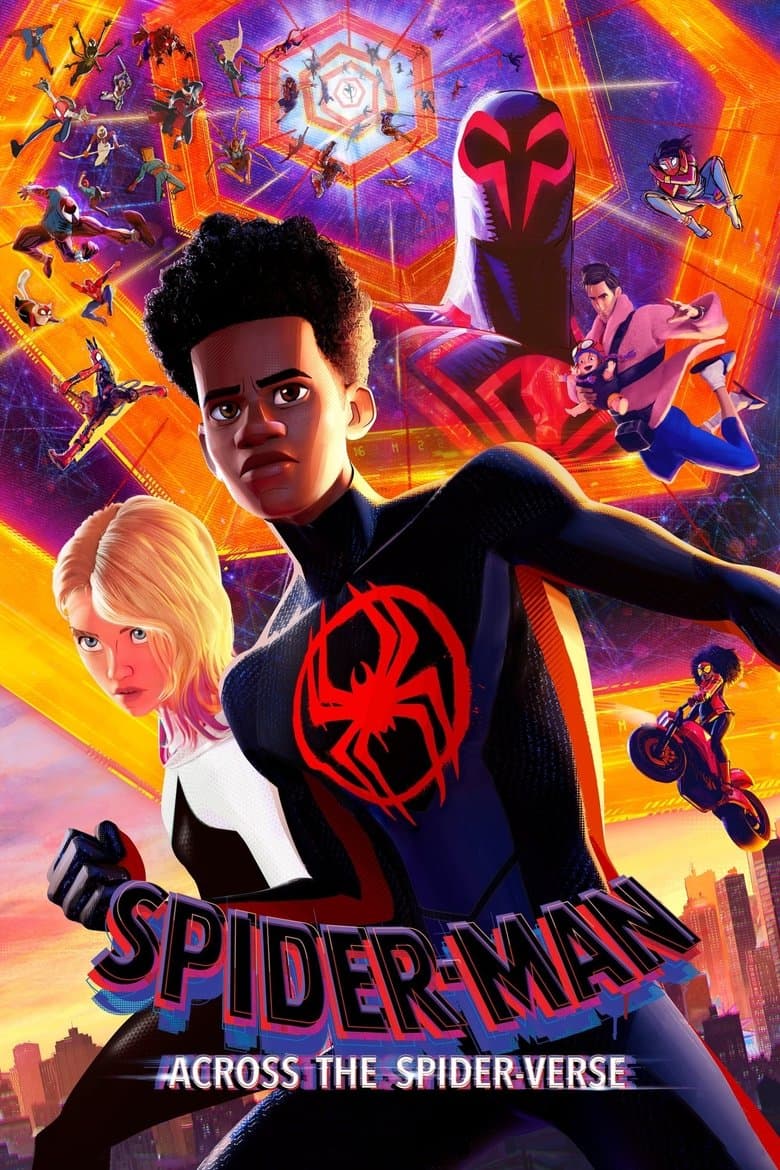
Miles Morales reunites with Gwen Stacy and is pulled into the Spider-Society, a multiverse collective led by Spider-Man 2099. When Miles rejects a canonical tragedy the Society considers non-negotiable, he becomes the hunted rather than the heroic — and his mother's life hinges on his refusal to obey.
Full Breakdown
A sequel that treats canon as an ethical problem
Across the Spider-Verse takes the one question the first film left open — does Miles count? — and turns it into an institutional drama. Miguel O'Hara's Spider-Society is a bureaucracy that needs tragedies to happen on schedule, and the film frames rebellion as not obeying the algorithm.
The decision to make 'canon' itself the antagonist is genuinely clever, because it externalizes a problem every superhero franchise has been quietly defending for a decade. The film argues, in bright primary colors, that predestination is a corporate convenience.
Every universe has its own physics of animation
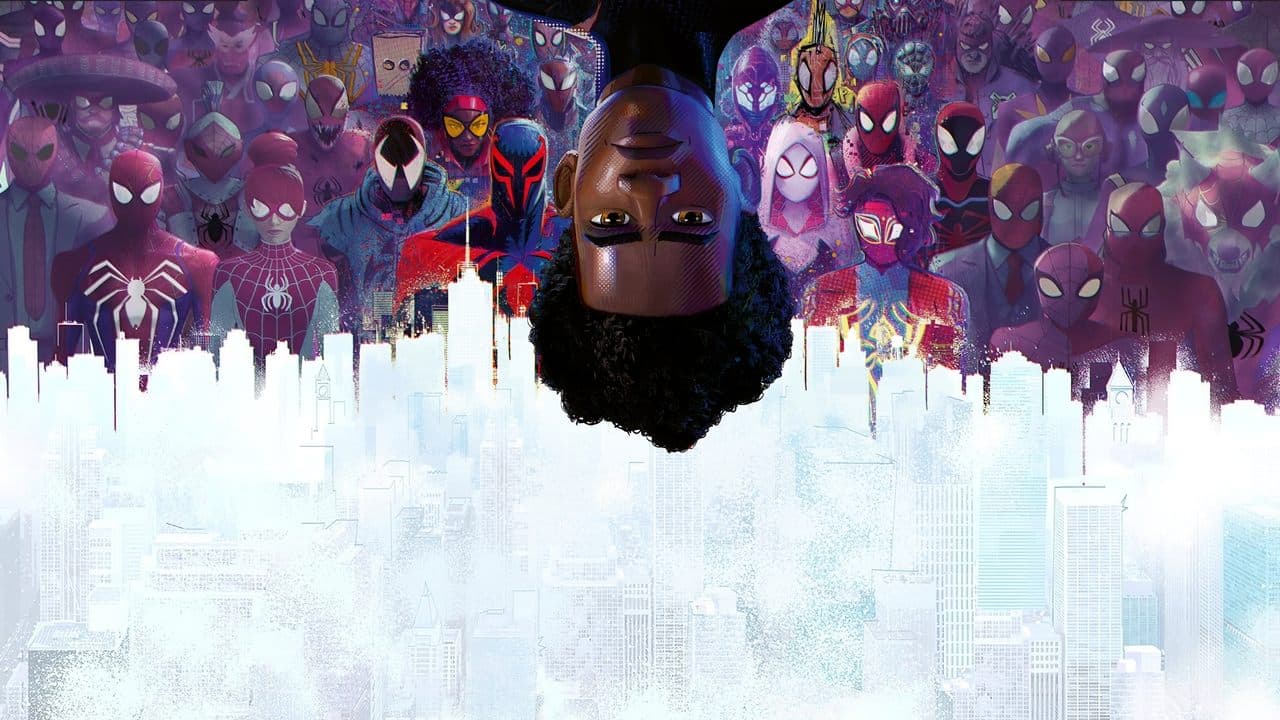
Gwen's Earth-65 is watercolor emotional weather. Pavitr Prabhakar's Mumbattan is Ben-Day dot maximalism. The Spot is a pencil-and-ink experiment that becomes a full antagonist. The film's visual thesis is that identity and medium are the same problem.
The frame-rate trick — characters animating on different cadences based on their emotional state — is a technical achievement that audiences feel without naming. The Sony Pictures Imageworks team has quietly reset the ceiling for what mainstream animation is allowed to look like.
The Miles–Gwen center holds
Shameik Moore and Hailee Steinfeld deepen both performances. Gwen's opening act with her father is the year's most emotionally precise sequence in animation, and Miles's dinner-table conversation with his mother is the film's real thesis statement.
Daniel Pemberton's score layers hip-hop, orchestral motifs, and synth so that every universe has its own sonic DNA. It is one of the most ambitious animated scores ever produced.
Pros and cons
Pros: The most visually inventive mainstream animation in years; a sequel that advances characters instead of just stacking them; a villain (The Spot) whose design is itself a joke and a thesis.
Cons: The film is explicitly Part One and ends mid-escalation; the Spider-Society info dump in the third act is legitimately dense; some viewers will find the visual density exhausting on first watch.
What Hits
- Exceptional execution of animation, action, adventure tropes
- Stunning cinematography and production design that demands a large screen
- A compelling lead performance that anchors the entire narrative
Pressure Points
- A few minor subplots feel slightly underdeveloped
- May feel overly familiar to long-time fans of the genre
94
Where to Watch


Primary Cast
Featured Actors

Shameik Moore
Miles Morales / Spider-Man

Hailee Steinfeld
Gwen Stacy / Spider-Woman

Oscar Isaac
Miguel O'Hara / Spider-Man 2099

Jason Schwartzman
Jonathan Ohnn / The Spot

Issa Rae
Jessica Drew / Spider-Woman
Production Specs
Technical Details
You might also like
Similar titles worth watching

Join the discussion
Most viewed today
 01
01News · 7 min
The mid-budget theatrical film is quietly winning 2026
 02
02News · 6 min
What the April 2026 box office is telling us about how audiences watch now
 03
03News · 8 min
Inside the Denis Villeneuve playbook every studio is now trying to copy
 04
04News · 7 min